
Fall cleanup in Greater Boston: what commercial properties should be scheduling right now
Mid-October in Greater Boston means one thing on the exterior maintenance calendar: the leaves are coming down, and they're not stopping until November. For property managers overseeing commercial buildings, multifamily properties, and HOA-managed communities, fall cleanup isn't a single event — it's a sustained program that runs from now through the end of the season, and the properties that handle it well are the ones that planned for it rather than reacted to it.
Here's what comprehensive fall cleanup looks like for managed properties, why each piece matters, and what happens when any of it gets skipped.
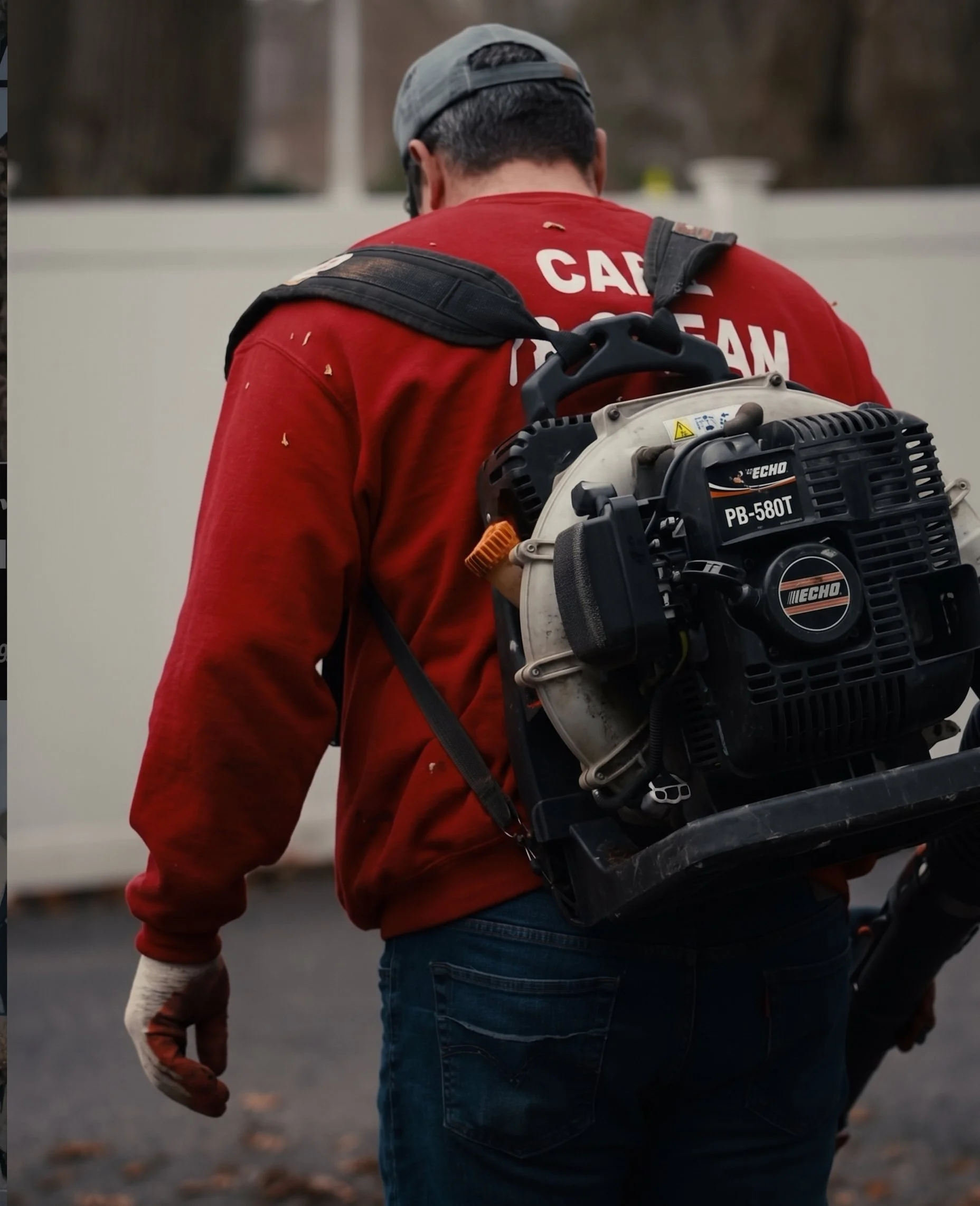
Leaf removal: more than an aesthetic issue
Leaves look like a cosmetic problem. They're not. On a commercial or multifamily property, accumulated leaves create a cascade of practical issues that get progressively harder to manage the longer they sit.
Slip and fall liability. Wet leaves on hard surfaces — walkways, entryway steps, parking areas, loading docks — are among the most common causes of slip and fall incidents on commercial properties in the fall. In Massachusetts, property owners and managers have a duty to maintain safe walking surfaces, and leaf accumulation on high-traffic exterior areas is a documented liability exposure. One incident creates costs that dwarf an entire season of cleanup service.
Drainage blockage. Leaves collect in and around drainage grates, catch basins, and downspout outlets. When those pathways are blocked and a heavy rain comes — and in New England fall, it always does — standing water pools on walkways, parking surfaces, and building approaches. That standing water becomes ice when temperatures drop, compounding the liability issue significantly.
Foundation and surface damage. Leaves piled against a building foundation or retaining wall trap moisture against the surface through repeated wet-dry cycles, accelerating deterioration of masonry, wood trim, and below-grade waterproofing. Leaves left in planter beds mat down over the winter and suppress the soil in ways that damage plantings and make spring bed preparation harder and more expensive.
Pest and rodent attraction. Leaf piles against buildings and in sheltered exterior areas create insulation and cover that rodents use as harborage — particularly relevant heading into winter when animals are seeking warmth. This connects directly to the rodent activity that spikes in buildings every fall, and it's one of the preventable contributors to that problem.
What a proper fall cleanup program covers
Leaf removal from walkways, entryways, and common areas. The front line of fall cleanup for any commercial or multifamily property. High-traffic pedestrian areas need to be cleared on a frequency that matches how fast leaves are accumulating — which in peak leaf fall weeks in Greater Boston means more than once. A single cleanup in late October misses the problem entirely during the weeks when it's worst.
Planter bed cleanup and winterization. Summer and fall annuals need to be cut back and removed. Perennial beds need to be cleared of dead material. Mulch beds need to be assessed and topped off before winter to provide insulation to root systems. Planter pots that were installed for the season need to be emptied, cleaned, and stored — or transitioned to winter-appropriate plantings for properties that want year-round curb appeal at entrances and lobbies.
Tree pit and landscape bed maintenance. Tree pits in urban properties collect leaves, debris, and litter throughout the fall. Left unaddressed, they become compacted, waterlogged, and structurally damaging to the tree base. Clearing and edging tree pits as part of a fall cleanup program protects the plantings and keeps the property looking maintained.
Parking area and lot cleanup. Leaves, litter, and debris that accumulate in parking areas and along perimeter fencing through the fall don't just look bad — they get compressed and matted into the pavement surface over the winter, making spring cleanup harder. Fall blowing and sweeping of parking areas is a maintenance step that most property managers overlook until spring, when they're paying to deal with months of accumulated material.
Exterior common area furniture removal and storage. Benches, tables, chairs, and other exterior common area furniture left out through the winter deteriorate faster and require more restoration in the spring. Fall cleanup is the right time to assess, clean, and properly store exterior furniture — or arrange for pieces that aren't weather-rated to be brought inside.
The frequency question: one cleanup or a program?
This is one of the most common mistakes in fall exterior maintenance. A single cleanup visit in late October or early November addresses what's on the ground at that moment — but Greater Boston leaf fall runs from early October through mid-November in most years, and the week after a cleanup can look identical to the week before if the trees on or adjacent to a property are still dropping.
Properties with significant tree coverage need a fall cleanup program, not a single visit. That typically means two to four service visits scheduled across October and November, timed to follow the progression of the leaf fall rather than set on a fixed calendar date. The right frequency depends on the property's tree coverage, the surrounding streetscape, and how quickly debris accumulates on exterior surfaces.
For properties with minimal tree coverage but significant foot traffic — urban commercial buildings, for example — a single thorough late-season cleanup may be sufficient. The assessment starts with an honest look at how the property accumulates debris and what the tolerance is for leaf accumulation between service visits.
Connecting fall cleanup to winter preparation
Fall cleanup and winter preparation aren't separate programs — they're sequential, and the fall cleanup sets the condition of the building's exterior heading into the most demanding season of the year.
Walkways that go into winter clear of debris are better positioned to drain properly when snow melts. Planters that are properly winterized require less remediation in the spring. The investment in fall cleanup is partly about how the property looks now and substantially about what it costs to manage it through and after winter.
78-Clean coordinates fall exterior cleanup, planter winterization, and landscape bed maintenance, with 78-Fixit handling gutter clearing, furniture storage, and any repairs identified during the walkthrough — all through a single Relationship Manager, on a schedule tailored to the property.
October is the right time to get on the schedule. Call 617-78-CLEAN or visit 78clean.com to book a fall cleanup assessment or request a proposal.